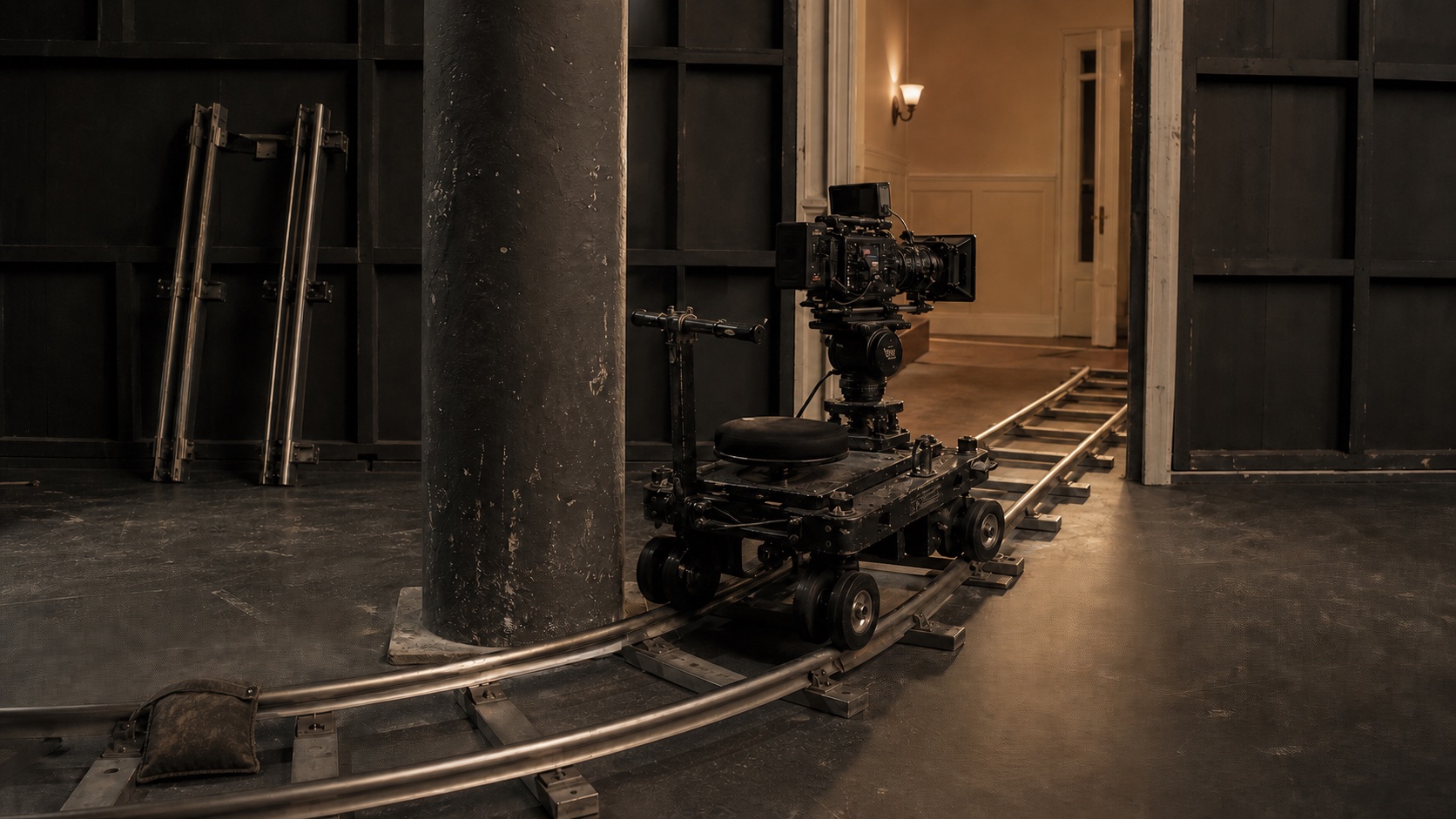
Every medium refuses something.
A sentence can work on the page because the reader controls the pace. They can stop, reread, look back, and hold one clause while the next one arrives.
Put the same sentence in someone’s mouth and the conditions change. The speaker needs breath. The listener receives the words once, in order. A nested thought that looked precise in writing may become impossible to follow aloud.
The words can remain identical while the communication fails.
That is not a problem with language alone. It happens whenever an idea moves into a form that has its own behavior.
A deck can hold several possibilities at once. A shoot has to choose what exists in front of the camera. A storyboard can imply motion between perfect frames. An edit has to account for duration, coverage, and rhythm. A polished interface can suggest effortless use. The actual product has to respond when a user taps, waits, makes a mistake, or gets interrupted.
The medium is not a container for an already finished idea.
It is one of the forces that decides what the idea can become.
The format is not a delivery layer
Teams often speak as if the idea is complete before it enters production.
The concept has been approved. Now it needs to become a film, a site, an event, a presentation, a product, or a campaign. The language makes the next stage sound mechanical. The important thinking has happened. Production only needs to move the idea into the selected format without damaging it.
But changing mediums is not exporting a file.
Each medium handles time, space, attention, control, and error differently. Some qualities come easily. Others get expensive. Part of the idea may carry over. Another part has to be rebuilt.
A written argument can accumulate detail because the reader can navigate it. A spoken argument has to remain legible while it moves. A still image can suspend a perfect moment. Motion has to explain how the work entered that moment and how it leaves. A live event can create presence that a recording cannot reproduce. It gives up the certainty that every moment will happen exactly as planned.
These are not technical details added after the creative decision.
They are creative conditions.
If the idea ignores them, production inherits a promise the medium cannot keep.
Abstraction is generous
An idea is most flexible before it becomes real.
In a deck, a phrase can feel cinematic and intimate, immediate and interactive, all at once. Each person in the room imagines a private version of how those qualities might coexist.
The phrase does not have to choose a lens. It does not need a location. It does not have to fit a runtime or survive a performance. It can suggest an experience without explaining the mechanism that creates it.
That generosity is useful early in a process. Possibility needs room before judgment narrows it.
The problem begins when that abstraction becomes a production promise before anyone tests what the medium can actually do.
A storyboard may sell a transition that depends on a camera being in two places at once. A script may contain a line that nobody can say naturally. A desktop design may become unreadable when it is reduced to a phone. A live segment may demand spontaneity and exact repeatability in the same moment.
That does not mean those ideas have failed.
But admiration is no longer enough.
The medium has asked a question the concept did not have to answer.
Decide what has to survive
Good translation begins by separating the governing intention from its current form.
What does the audience need to understand, feel, or do?
What part of the idea creates that result?
What belongs only to the way the idea was first presented?
And what can the new medium actually do?
Suppose a sentence on the page contains three qualifications because precision matters. Spoken aloud, the listener loses the main thought before the final qualification arrives. The faithful adaptation may need four shorter sentences.
The language changes so the meaning can survive.
That is not simplification for its own sake. It is fidelity to the listener rather than fidelity to the paragraph.
The same distinction applies when a deck becomes a shoot. The deck can leave room for different interpretations because its job is to establish a direction. A camera cannot photograph an unresolved category. It needs a place, a body, light, sound, time, and a sequence of choices.
The production may have to surrender a visual reference, combine two moments, change the scale, or replace a clever transition. The question is not whether the finished work resembles every slide.
The question is whether the experience that made the idea worth choosing is still there.
An idea does not survive because all of its original parts survive.
It survives because the right part does.
Literal fidelity can betray the idea
Teams often protect an idea by preserving its most visible features.
The voice-over repeats the deck. The motion follows the storyboard exactly. The mobile product shrinks the desktop layout. The live presentation follows a film treatment beat for beat.
The source remains recognizable, so the adaptation appears faithful.
But resemblance can hide functional loss.
The sentence still contains every word, but nobody can follow it. The shot matches the board, but the camera move makes the performance feel remote. The interface retains every control, but the user can no longer find the next action. The live event preserves the scripted sequence, but leaves no room for the presence that justified doing it live.
A literal translation can preserve the evidence of the idea while losing its effect.
This is why production judgment sometimes makes the work look less like the approved source.
The change is not automatically a creative departure. It may be the work required to keep the governing intention intact under new conditions.
The producer’s job is to make that distinction visible before every necessary adaptation is treated as erosion.
What is being changed because the team prefers something else?
What is being changed because the medium requires a different behavior?
What remains true after the change?
Those questions turn adaptation from a defensive conversation into a production decision.
Refusal is not automatically wisdom
A constraint does not become virtuous because it is difficult.
Sometimes the medium is wrong for the idea. Sometimes a technical limitation is temporary. Sometimes a budget decision is being described as a law of physics. Sometimes a team calls something impossible because its current process does not know how to make it.
Every medium refuses something, but not every refusal should be accepted.
The team still has to determine what kind of boundary it has reached.
Is this fundamental to how the audience receives the work?
Is it a limit of the available technology, time, access, or skill?
Can the medium be expanded?
Should the idea change, or should the production choose another form?
A live event cannot guarantee perfect repeatability without giving up some of what makes it live. That is an inherent trade. A particular stage being too small is a production condition. That trade requires a decision about risk and presence. The stage problem may require another venue.
Good production does not obey every limit.
It distinguishes the limits that define the form from the limits the team can change.
Test the idea where it has to live
The cheapest way to learn what a medium refuses is to test early.
Read the line aloud.
Put the boards in time.
Try the camera move in the space.
Use the interface with one hand while distracted.
Rehearse the live transition instead of admiring it in the run of show.
These are creative tests, not just execution checks. They reveal whether the idea works in its medium or is still being protected by imagination.
The purpose is not to reduce ambition before the work begins.
It is to find the part of the ambition the medium can make real.
The earlier that happens, the more choices remain available. A sentence can be rewritten. A board can change. A design can establish a different hierarchy. The team can decide where a live segment needs control and where uncertainty creates value.
Later, the same discovery returns as cost.
The crew is waiting. The build is underway. The edit has no coverage. The talent is holding language that never belonged in a mouth. Everyone is now solving a creative problem at production prices.
The medium was always going to ask the question.
Production decides how expensive the answer will be.
The medium is part of the decision
An idea does not become real by remaining unchanged.
It becomes real by finding a form that can perform its essential promise.
That requires loss. Some ambiguity disappears. Visual references break. Details move. Control is exchanged for presence. Breadth is exchanged for clarity.
The goal is not to preserve everything.
The goal is to know what the work cannot afford to lose.
Every medium refuses something.
The medium is not where the idea goes after the decision.
The medium is part of the decision.